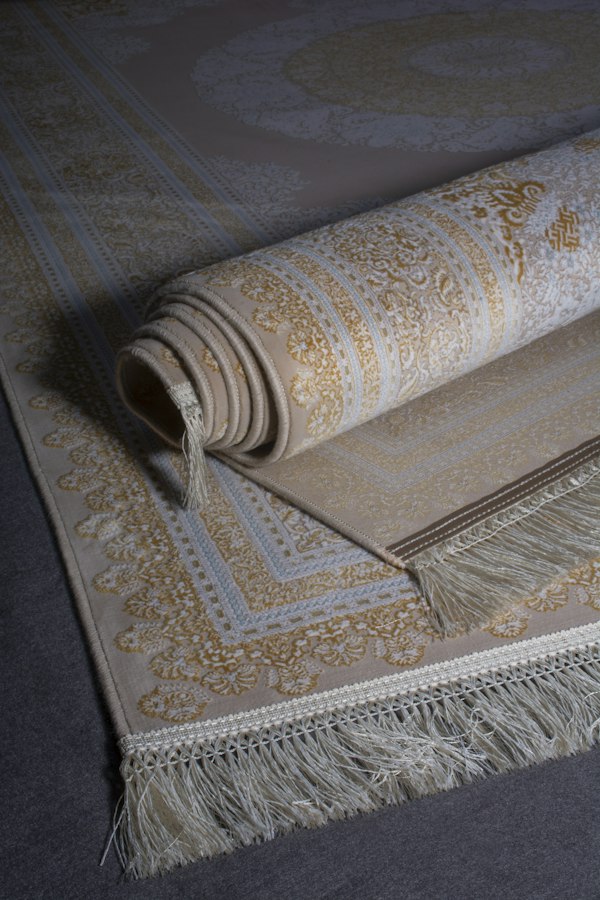
How to Identify a High-Quality Handmade Rug Like an Expert
Discover how professionals evaluate handmade rugs using knot density, weaving consistency, finishing, materials, and artisan craftsmanship before making a purchase.

Walking into a rug showroom or browsing an online luxury gallery can be overwhelming. With prices ranging from a few hundred dollars to tens of thousands, how do you know if you are looking at a genuine masterpiece or an overpriced imitation?
At Ajaypee Carpets, our master weavers in Bhadohi know exactly what makes a rug exceptional. Here is the insider’s guide on how to identify a high-quality handmade rug like an industry expert.
1. The "Flip Test": Inspecting the Back
The easiest and most definitive way to evaluate a rug is to flip it over.
- The Mirror Image: A true hand-knotted rug will display the exact design on the back as it does on the front. Every single color and motif should be clearly visible.
- No Backing Material: If the back is covered with canvas, cloth, or a rubbery latex coating, the rug is hand-tufted or machine-made, not hand-knotted.
- Visible Knots: You should be able to see the individual, slightly uneven knots that make up the foundation.
2. Counting the KPSI (Knot Density)
KPSI (Knots Per Square Inch) is the metric experts use to determine the fineness of the weave.
- How to calculate: Flip the rug over and place a ruler on the back. Count the number of knots along one inch vertically, and one inch horizontally. Multiply those two numbers together. (e.g., 10 knots down x 10 knots across = 100 KPSI).
- What it means: A higher KPSI means the weaver spent significantly more time on the piece, allowing for incredibly intricate, curved designs. A good quality thick wool rug might have 80-120 KPSI, while fine silk rugs can easily exceed 300+ KPSI.
3. The "Fold Test": Checking the Foundation
Gently fold the rug back on itself (creating a crease). Look deeply into the pile where the fibers meet the foundation.
- Tightness: In a high-quality rug, the knots should be packed tightly together. You should have a hard time seeing the horizontal and vertical foundation threads (the warp and weft).
- Density: The denser the packing, the more durable the rug will be against heavy foot traffic.
4. Evaluating the Fringe
Look closely at the fringe at the ends of the rug.
- Integral vs. Attached: In a true hand-knotted rug, the fringe is structural. It is the excess warp threads that run entirely through the length of the carpet, holding the knots in place. If the fringe looks like it has been sewn or glued onto the edge as an afterthought, the rug is not authentically hand-knotted.
5. The Tactile Test: Feeling the Wool
The quality of the material is just as important as the weaving technique.
- Lanolin Richness: High-quality wool (like New Zealand wool) contains natural lanolin. When you run your hand firmly over the surface, the wool should feel soft, supple, and leave a very slight slickness on your palm.
- The "Scratch" Warning: If the wool feels brittle, dry, scratchy, or sheds excessively when you rub it, it is likely lower-grade "dead wool" (sheared from a deceased sheep) or heavily chemically treated.
6. Looking for "Abrash"
Experts don’t look for machine-like perfection; they look for the human element. Abrash refers to the natural, horizontal color variations or striations that occur when different batches of hand-spun, hand-dyed yarn are used.
- Rather than a defect, abrash is highly prized. It gives the rug depth, character, and proves that natural, artisanal dyeing methods were used rather than uniform chemical vat-dyeing.
7. The Selvage (Side Binding)
Check the long edges (sides) of the rug, known as the selvage.
- A high-quality rug will have a thick, tightly wrapped edge, usually bound by hand. This protects the rug from unraveling. If the edge feels loose, flimsy, or hastily machine-stitched, it indicates corners were cut during finishing.
Final Verdict
By inspecting the back, checking the fringe, feeling the wool, and understanding knot density, you can evaluate a rug with the confidence of an expert. A true high-quality handmade rug is a labor of love, meant to endure for generations.
To see examples of expert-level craftsmanship, explore the authentic, hand-knotted collections at Ajaypee Carpets.
Published in Buying Guides